
Hair falling more than usual? Skin looking tired no matter how much you sleep?
Chances are you’ve already come across PRP treatment while searching for a fix — and you’re probably wondering if it actually works, or if it’s just another trending buzzword. Here’s the honest breakdown.
What Exactly Is PRP Treatment?
PRP treatment (Platelet Rich Plasma treatment) uses your own blood to trigger your body’s natural healing and regeneration process.
A small blood sample is drawn from your arm, spun in a centrifuge to separate the platelet-rich plasma, and then injected back into the scalp or face — depending on what you’re treating.
Because it’s your own blood, there’s no foreign substance involved, which is why it’s considered one of the safer regenerative treatments available today.
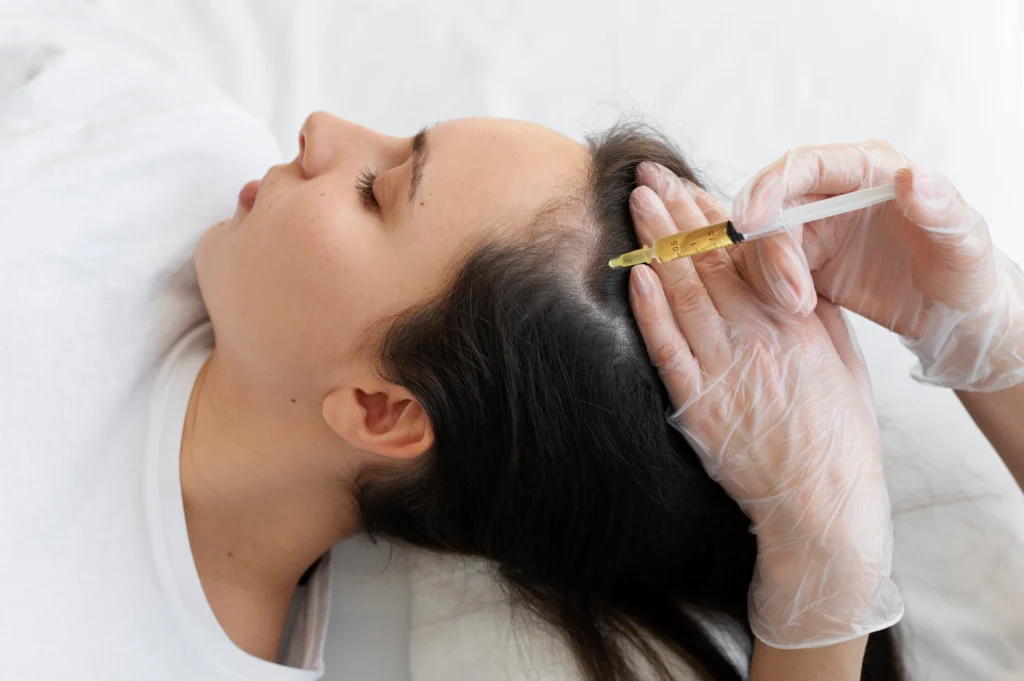
Table of Contents
Will It Actually Work for You?
PRP works best for:
- Hair thinning (not full baldness) — genetic, postpartum, or stress-related hair fall
- Dull, aging skin — fine lines, acne scars, uneven texture
- Under-eye hollowness — dark circles that concealer alone can’t fix
If your hair loss is already advanced with permanent bald patches, PRP alone won’t be enough on its own — it would need to be combined with a hair transplant. A good clinic should tell you this upfront, not after you’ve paid for a package that won’t deliver.
Curious if PRP treatment is right for your hair or skin concern? Book a free consultation at Prerna Skin Clinic and get an honest assessment before you decide.
How Does the Procedure Actually Work?
- Blood is drawn from your arm, similar to a routine blood test.
- It’s spun in a centrifuge to extract the platelet-rich plasma.
- The plasma is injected into the scalp or face using fine needles — sometimes paired with microneedling for facial treatments.
No synthetic chemicals. No fillers. Just your own concentrated growth factors doing what they’re naturally designed to do.
Is It Painful? What About Downtime?
Most people describe it as a mild pinprick sensation rather than actual pain, and numbing cream is available for anyone particularly sensitive. Downtime is minimal — you might notice slight redness for 24 to 48 hours, but most people return to work or normal activities the same day.
How Many Sessions Will You Need?
| Concern | Sessions Needed | First Visible Results |
|---|---|---|
| Hair regrowth | 4–6 sessions (3–4 weeks apart) | 3–6 months |
| Skin/face rejuvenation | 3–4 sessions | 4–8 weeks |
| Maintenance | Every 4–6 months | Ongoing |
Hair growth especially is a slow biological process, so results build gradually rather than overnight — anyone promising instant, dramatic hair regrowth from PRP alone isn’t being fully honest with you.
PRP vs Other Treatments — Which One Do You Actually Need?
PRP vs Hair Transplant PRP is non-surgical and works on thinning hair where follicles are still alive. A hair transplant is surgical and needed when follicles are already gone. The two are often combined for the best long-term results.
PRP vs Mesotherapy (for Hair) PRP stimulates follicles directly using your blood’s growth factors. Mesotherapy feeds the scalp with a vitamin and nutrient blend. PRP tends to work better for genetic thinning, while Mesotherapy is more effective when hair fall is linked to nutritional deficiency.
PRP Facial vs HydraFacial HydraFacial gives you deep cleansing, hydration, and an instant glow — great for monthly upkeep. PRP facial targets deeper issues like scarring, fine lines, and collagen loss — best used as a periodic deeper treatment. Many people benefit from using both for different purposes.
Is PRP Treatment Safe?
For most people, yes — since it uses your own blood, the risk of allergic reaction is low. That said, it isn’t for everyone. You should avoid PRP if you have:
- Blood disorders or clotting issues
- An active skin infection
- Certain types of cancer
- Are currently on blood-thinning medication
A proper clinic will screen for these during your first consultation, not just book you in for a package.
How Much Does PRP Treatment Cost?
Cost depends on the area being treated (scalp vs face) and how many sessions your specific case requires. Be cautious of clinics quoting a flat, generic price without assessing your condition first — an honest estimate should come after a proper consultation, not before.
The Bottom Line
PRP treatment isn’t a miracle fix, but it is a genuinely effective, low-risk option for early to moderate hair thinning and for skin concerns like scarring, dullness, and fine lines — especially if you’re looking for something that works with your body rather than masking the problem temporarily. The key is realistic expectations: it takes multiple sessions, results build gradually, and it works best when the clinic actually assesses your specific concern instead of treating it as a one-size-fits-all package.
FAQ
Does PRP treatment really work?
Yes, for early to moderate hair thinning and skin concerns like scarring and dullness — though it won’t reverse advanced baldness on its own.
How many PRP sessions are needed for hair growth?
Typically 4–6 sessions spaced 3–4 weeks apart, followed by maintenance every 4–6 months.
Is PRP treatment painful?
Most people feel only a mild pinprick sensation. Numbing cream is available if needed.
Is PRP treatment safe?
Yes for most people, since it uses your own blood. Not recommended for those with blood disorders, active infections, or on blood thinners.
How long do PRP results last?
Several months to about a year, with maintenance sessions needed to sustain results.
